
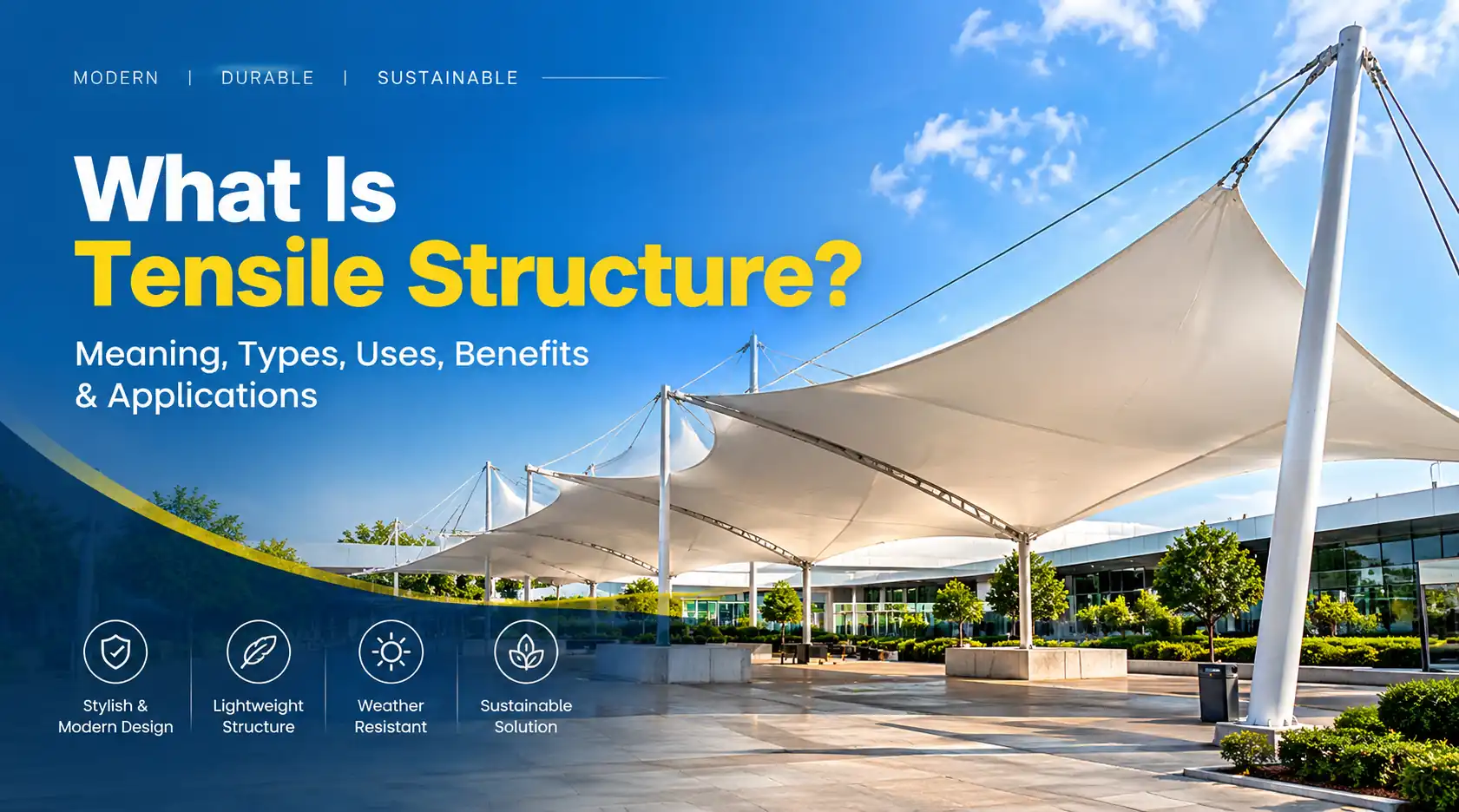
What Is Tensile Structure? Types, Uses, Benefits & Applications
What Is Tensile Structure? It is a lightweight architectural system that uses tensioned fabric or membrane materials supported by cables, steel frames or other structural elements to create covered spaces. Tensile structures are used for car parking shades, entrance canopies, walkway covers, tensile roofing, gazebos and customized architectural applications.
If you are researching what is tensile structure and how it works, understanding its design, materials and applications can help you choose a suitable solution for your project. This guide explains the meaning of tensile structures, their main types, benefits, materials, installation process and important design considerations.
What Is Tensile Structure? Meaning and Basic Working
The meaning of a tensile structure comes from the way tension helps the system maintain its intended shape and transfer loads through supporting elements. Instead of depending entirely on a conventional rigid roof, a tensile membrane structure uses a carefully designed arrangement of fabric, cables, supporting members and connections.
Understanding what is tensile structure begins with its main components. The membrane forms the covered surface, while the supporting framework and connections help maintain the designed geometry. The complete system must be assessed according to the intended application, dimensions, structural requirements and environmental conditions.
A tensile structure can create curved, flowing and visually distinctive roof forms. Its final shape is influenced by the membrane properties, support positions, tensioning arrangement and engineering design.
How Does a Tensile Structure Work?
A tensile structure works by maintaining tension in the membrane or flexible structural elements while transferring forces through the supporting system. The complete arrangement is designed around the required span, shape, loading conditions and installation requirements.
1. Tensile Membrane
The membrane forms the visible roof or covering. Its selection depends on the intended application, product specifications, environmental exposure and maintenance requirements.
2. Supporting Frame
Steel columns, masts, frames or other structural members support the membrane and transfer loads to suitable foundations or supporting structures.
3. Cables and Connections
Cables, clamps, connectors and related components help maintain the geometry and tension required by the selected design.
4. Foundations and Anchoring
The supporting structure needs an appropriate connection to the ground, foundation or existing building. The arrangement depends on the actual site and structural requirements.
5. Engineering and Drainage
The design should consider relevant loads, wind exposure, membrane tension, water drainage and installation conditions. These factors need to be assessed for the specific project.
What Is Tensile Structure Used For?
Tensile structures can serve many architectural and functional purposes. The most suitable design depends on the intended use, available space, coverage requirements, appearance and engineering considerations.
1. Car Parking Tensile Structures
Car parking tensile structures provide covered parking spaces in residential, commercial and institutional settings. Their layouts can be planned around vehicle dimensions, parking bays, traffic movement, support locations and the required coverage.
2. Tensile Walkway Covers
Tensile walkway covers provide sheltered pedestrian routes between buildings, entrances, parking areas and other connected spaces. Design considerations include walkway dimensions, connection points, pedestrian movement and drainage.
3. Entrance Canopies
Tensile entrance canopies create covered entry points while contributing to a building’s architectural appearance. Their shape, projection and support arrangement depend on the entrance layout and the required coverage.
4. Tensile Roofing Structures
Tensile roofing structures use tensioned membranes and supporting systems to cover different types of spaces. They can be developed with varied roof shapes, depending on the span, intended use and structural requirements.
5. Tensile Membrane Structures
Tensile membrane structures use engineered membrane surfaces supported by cables, masts or frames. They can be considered for architectural features, outdoor gathering areas and customized covered spaces.
6. Gazebos and Outdoor Shades
Tensile gazebos create shaded outdoor areas for seating, relaxation and gatherings. Their shape and dimensions can be adapted to the available space and intended function.
7. Swimming Pool Shades
Swimming pool shade structures provide coverage for selected poolside areas. Their design may consider seating, walking routes, exposure to weather, drainage and the arrangement of supporting elements.
8. Commercial and Industrial Structures
Commercial and industrial tensile structures can provide coverage for entrances, parking areas, circulation routes and other spaces that require customized roofing or shade solutions.
9. Tensile Awnings
Tensile awnings and customized shades can cover entrances, terraces, outdoor areas and other selected spaces. Their design depends on the required projection, appearance, dimensions and support arrangement.
10. Custom Architectural Structures
Customized tensile structures are developed for applications that require a particular shape, span or coverage arrangement. Their feasibility depends on the intended use, material specifications and engineering requirements.
Materials Used in Tensile Structures
Material selection affects a structure’s appearance, suitability, durability and maintenance requirements. The right choice depends on the design and the conditions in which the structure will be used.
PVC-Coated Polyester Fabric
PVC-coated polyester is commonly used in architectural fabric structures. Its suitability depends on the product grade, coating, reinforcement, finishing and intended operating conditions.
PTFE-Coated Glass-Fibre Fabric
PTFE-coated glass-fibre membranes are used in selected architectural applications. Their suitability depends on the required performance, project specifications and installation details.
ETFE Membrane Systems
ETFE is a lightweight fluoropolymer material used in certain architectural roof and façade applications. ETFE systems have different design and installation requirements from conventional fabric membranes.
Structural Steel
Steel may be used for columns, frames, masts and other supporting components. Its specification depends on the structural design, environmental exposure and project requirements.
For a technical overview, read the American Society of Civil Engineers’ resources on tensile membrane structures. You can also consult the European Commission’s technical overview of tensioned membrane structures.
Benefits of Tensile Structures
When properly designed for an appropriate application, tensile structures offer several potential advantages.
Lightweight Architectural Forms
Membrane systems can create distinctive roof shapes while providing coverage with a relatively lightweight construction system.
Design Flexibility
The combination of membrane surfaces, cables and supporting elements allows architects and designers to explore different shapes and layouts.
Efficient Space Coverage
A carefully planned structure can provide coverage for parking areas, entrances, walkways and outdoor spaces while maintaining the intended movement routes.
Contemporary Appearance
Curved membranes and exposed structural elements can give a building or outdoor space a modern architectural character.
Natural Light Options
Some membrane materials allow a degree of natural light transmission. The actual amount depends on the selected product and its specifications.
Multiple Applications
Tensile systems can be considered for different sizes and types of covered spaces. Each design still requires an assessment of feasibility, site conditions and structural requirements.
Where Are Tensile Structures Commonly Used?
Tensile structures are used in many applications, including:
- Car parking areas
- Pedestrian walkways
- Building entrances
- Commercial buildings
- Swimming pool surroundings
- Outdoor seating areas
- Recreational spaces
- Industrial facilities
- Architectural roofing projects
- Customized shading applications
The suitability of each application depends on the required coverage, intended use, available space and engineering considerations.
Important Factors Before Installing a Tensile Structure
Before selecting a tensile structure, consider these essential factors.
Purpose and Coverage
Define the area to be covered, how the space will be used and what type of shelter is required.
Dimensions and Site Layout
Accurate dimensions help establish the proposed roof geometry, support locations and movement clearances.
Structural Design
The structural system should be assessed for the relevant loads, material properties, environmental conditions and applicable technical requirements.
Membrane and Frame Selection
Select materials according to the intended use, product specifications, exposure and maintenance requirements.
Drainage and Weather Exposure
Roof geometry and drainage arrangements should account for relevant environmental conditions and prevent unsuitable water accumulation.
Installation and Maintenance
Discuss installation access, execution requirements, inspection and long-term maintenance as part of the project planning process.
How Is a Tensile Structure Installed?
The process varies by project, but a typical workflow includes the following stages.
Step 1: Requirement Assessment
Discuss the application, approximate dimensions, desired coverage and available site information.
Step 2: Design and Engineering
Assess the proposed shape, support arrangement, membrane requirements and relevant technical considerations.
Step 3: Material Selection
Choose suitable membrane and structural components according to the agreed specifications.
Step 4: Fabrication and Preparation
Prepare the required components in accordance with the approved design and project scope.
Step 5: Installation
Coordinate the assembly and installation of the structure according to the project plan and site requirements.
Step 6: Final Review
Review the completed work against the agreed scope and relevant finishing and installation requirements.
The overall timeline depends on the structure’s size, design complexity, material availability, site readiness and installation scope.
What Affects Tensile Structure Cost?
The cost of a tensile structure varies according to the details of the project. Important factors include:
- Covered area and dimensions
- Structural shape and complexity
- Membrane selection and specifications
- Supporting frame and connections
- Foundation or anchoring requirements
- Fabrication requirements
- Site access and preparation
- Installation scope and logistics
- Customized design requirements
A project-specific quotation should explain the proposed materials, scope of work and relevant installation requirements. There is no single price that applies to every tensile structure.
Why Consider Habibi Tensile Structure Pvt. Ltd.?
Habibi Tensile Structure Pvt. Ltd. offers solutions for various tensile structure applications, including car parking shades, walkway covers, entrance canopies, tensile roofing and customized membrane structures.
The project discussion can cover the intended use, dimensions, design preferences, material requirements and installation scope. Understanding these details helps identify the relevant considerations before a solution is finalized.
If you are exploring what is tensile structure for a planned project, our team can discuss the application and the next steps according to your requirements.
Visit our Tensile Structure Services page to explore the available solutions, or view our project portfolio for examples of tensile structure applications.
Frequently Asked Questions
What Is Tensile Structure in Simple Terms?
A tensile structure is a covered system that uses tensioned fabric or membrane materials supported by elements such as cables, masts or a structural frame.
What Are the Main Types of Tensile Structures?
Common applications include car parking shades, walkway covers, entrance canopies, tensile roofing, membrane structures, gazebos and customized shade solutions.
Which Materials Are Used in Tensile Structures?
Depending on the application, materials may include PVC-coated polyester, PTFE-coated glass-fibre membranes, ETFE systems and structural steel.
Are Tensile Structures Suitable for Outdoor Use?
They can be suitable when the materials, structural design, drainage and installation arrangements are appropriate for the conditions in which the structure will be used.
What Affects the Cost of a Tensile Structure?
Cost depends on dimensions, design complexity, material selection, supporting components, site conditions, fabrication and installation requirements.
Do Tensile Structures Require Maintenance?
Maintenance requirements depend on the material, exposure and intended use. Appropriate inspection and cleaning can help monitor the structure’s condition.
How Can I Enquire About a Tensile Structure Project?
Share your intended application, approximate dimensions and available reference images with Habibi Tensile Structure Pvt. Ltd. to discuss the project requirements.
Discuss Your Tensile Structure Project
Now that you understand what is tensile structure and how these systems are used, the next step is to identify the requirements of your own project.
Whether you are considering a car parking shade, entrance canopy, walkway cover or customized tensile roof, Habibi Tensile Structure Pvt. Ltd. can discuss the intended application and relevant project scope.
Phone: +91 97597 96478
Email: habibiinteriormetalfabrication@gmail.com
Website: https://habibitensilestructure.com/